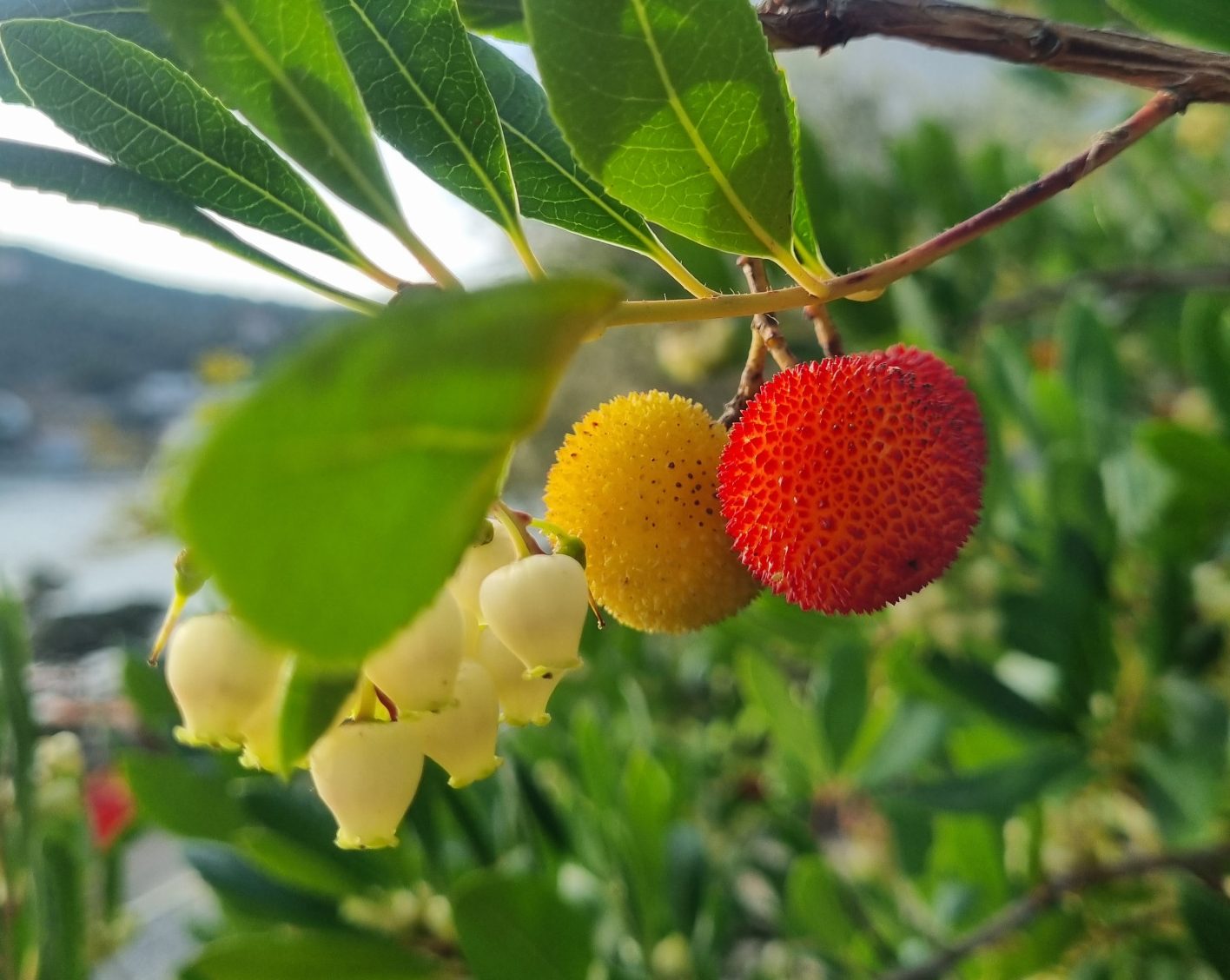
Im mediterranen Raum reifen die Früchte des Erdbeerbaumes zwischen Oktober und Januar zu leuchtend roten Kugeln heran.
Von HB-Redakteurin und Food-Bloggerin Sofia Papadopoulou
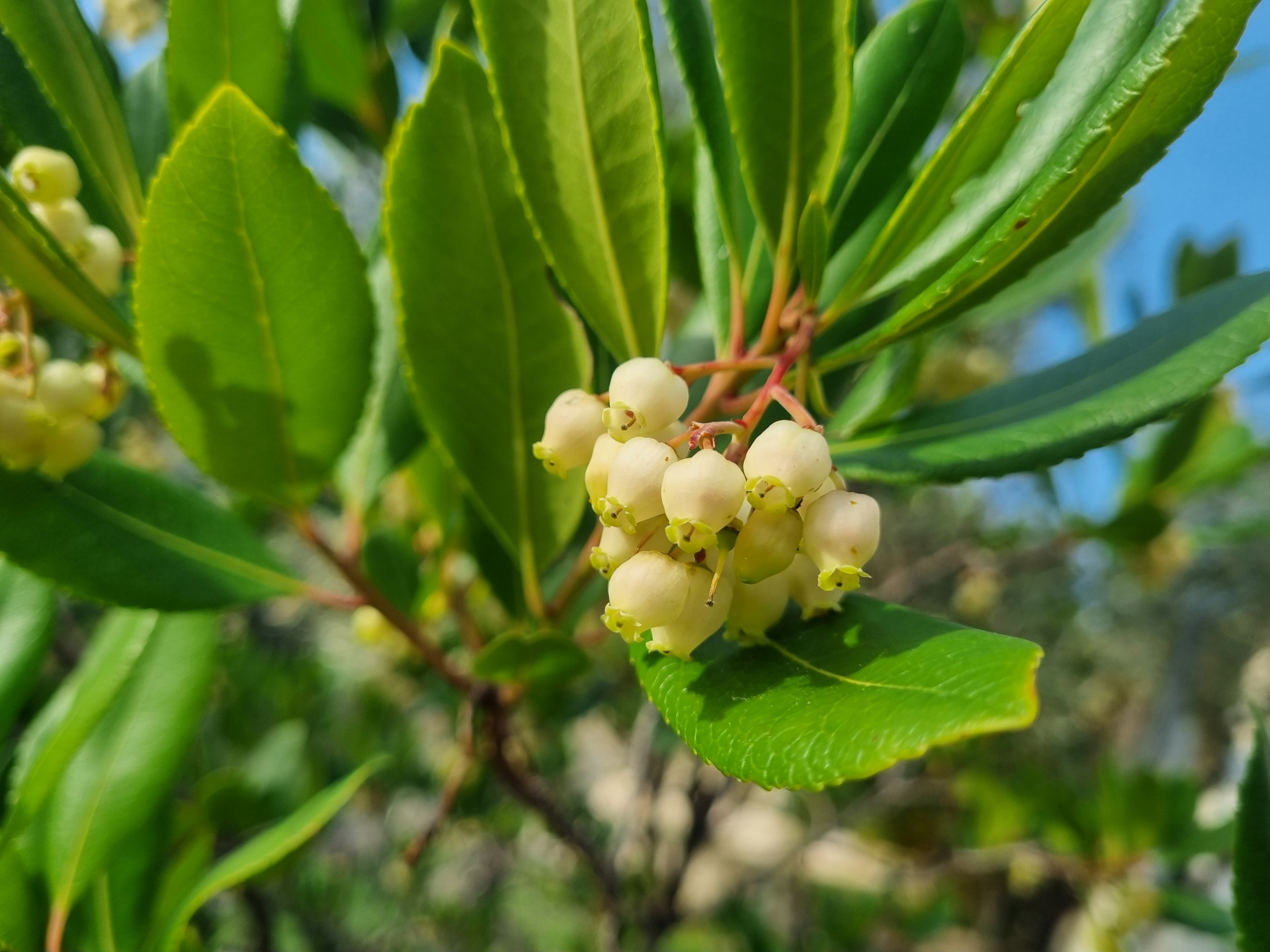
Griechenland – In Griechenland sind die leuchtend roten Kugeln des Heidekrautgewächses als Koumaria (Κουμαριά) bekannt und wenn man auf den deutschen Begriff „Erdbeerbaum“ (Arbutus) hinweist, dann kann man sich zahlreichem Kopfschütteln sicher sein. Nein, mit Erdbeeren haben diese Früchte nun wirklich nichts zu tun, die sich im Spätherbst aus den Blüten bilden, die an Maiglöckchen erinnern.
Auch bekannt als westlicher Hagapfel, Landbeere, Meerkirsche oder Sandbeere wachsen insgesamt elf Arten in Mittelamerika und dem Mittelmeerraum.
In Madrid ziert übrigens eine Bärin das Stadtwappen, welcher gerade die Früchte des Erbeerbaums genießt und in Portugal ist der aus den Früchten gewonnene Schnaps, der “Medronho“, eine beliebte Spezialität.
Verwandt mit den Blaubeeren schmecken die roten, weichen Früchte kurz vor dem Abfallen irgendwie nach Melone und Aprikose. Zu viele sollte man davon allerdings nicht auf einmal essen, sind die Koumaria doch ein natürliches Mittel gegen Durchfall. Die süß-sauren, mehligen Früchte eignen sich ebenfalls in Obstsalaten, Joghurt oder Früchtekuchen. Während in Italien zudem der aus den Blüten gewonnene seltene, bittere Honig als Köstlichkeit bekannt ist, genießen Griechen den besonders schmackhaften Tsiporou, der aus den reifen Koumaria gewonnen wird. Die innen gelborangen Früchte enthalten durchschnittlich 250 mg Vitamin C auf 100 g Fruchtfleisch, Kohlenhydrate und Ballaststoffe.
Westlicher Erdbeerbaum (Arbutus unedo)
Systematik
Asteriden
Ordnung: Heidekrautartige (Ericales)
Familie: Heidekrautgewächse (Ericaceae)
Unterfamilie: Arbutoideae
Gattung: Erdbeerbäume (Arbutus)
Wissenschaftlicher Name: Arbutus unedo
Wer nun keine Brennblase im Wohnzimmer stehen hat, kann die Früchte mit Zucker, Tsiporou oder Korn (wie in Kroatien) zu einem Likör verarbeiten oder sie als Marmelade genießen. Auf 1 kg Früchte kommen dabei 500 g Gelierzucker (2:1). Dazu die Früchte waschen, mit dem Gelierzucker vermischen und eine Stunde ruhen lassen. Den Mix pürieren, rund 8 Minuten kochen lassen und in sterile Einmachgläser füllen. Zum Abkühlen die Gläser, so wie es Oma schon gemacht hat, auf den Kopf stellen. (sp)
Koumaria – Strawberries that aren’t Strawberries at all
In the Mediterranean region, the fruits of the strawberry tree ripen into bright red spheres between October and January.
In Greece, these radiant red fruits of the heather family are known as Koumaria (Κουμαριά). Referring to them as “strawberries” (strawberry tree – Arbutus) in German usually provokes head-shaking. No, they really have nothing to do with strawberries – these fruits develop in late autumn from blossoms that resemble lily-of-the-valley.
Also known as Western strawberry tree, arbutus berry, madrone, or cane apple, there are a total of eleven species in Central America and the Mediterranean region. In Madrid, a bear enjoying the fruits of the strawberry tree adorns the city’s coat of arms, while in Portugal the spirit “Medronho,” made from the fruit, is a popular specialty.
Related to blueberries, the red, soft fruits taste somewhat like melon and apricot just before they fall from the tree. However, you shouldn’t eat too many at once, as Koumaria is a natural remedy against diarrhea. The sweet-sour, floury fruits are also great in fruit salads, yogurt, or cakes. In Italy, the rare and bitter honey made from its blossoms is considered a delicacy, while in Greece people enjoy Tsipouro made from ripe Koumaria. The yellow-orange flesh of the fruit contains on average 250 mg of vitamin C per 100 g, along with carbohydrates and dietary fiber.
Western Strawberry Tree (Arbutus unedo)
Order: Ericales
Family: Ericaceae (heather family)
Subfamily: Arbutoideae
Genus: Arbutus
Scientific name: Arbutus unedo
For those who don’t have a distillery at home, the fruits can also be made into a liqueur with sugar and Tsipouro (or Korn, as in Croatia), or into jam. Use 500 g gelling sugar (2:1) per 1 kg of fruit. Wash the fruit, mix with sugar, and let rest for one hour. Puree the mixture, boil for about 8 minutes, and fill into sterilized jars. Place the jars upside down to cool, just like grandma used to do.
Κουμαριά – Φράουλες που δεν είναι φράουλες
Στη Μεσόγειο οι καρποί της κουμαριάς ωριμάζουν σε έντονες κόκκινες μπάλες από τον Οκτώβριο έως τον Ιανουάριο.
Στην Ελλάδα οι κόκκινοι αυτοί καρποί του οικογενείας των ερεικοειδών είναι γνωστοί ως Κουμαριά. Αν κάποιος τους αποκαλέσει «φράουλες» (από το δέντρο Arbutus – φραουλιά), τότε σίγουρα θα προκαλέσει κούνημα κεφαλιού. Όχι, οι καρποί αυτοί δεν έχουν καμία σχέση με τις φράουλες· σχηματίζονται στα τέλη του φθινοπώρου από άνθη που θυμίζουν κρινάκια της κοιλάδας.
Γνωστή και ως δυτική κουμαριά (Arbutus unedo), φραουλιά, δενδρόφραουλο ή μερτσέρι, η οικογένεια περιλαμβάνει έντεκα είδη που απαντώνται στην Κεντρική Αμερική και τη Μεσόγειο. Στη Μαδρίτη, μια αρκούδα που τρώει τους καρπούς της κουμαριάς κοσμεί το έμβλημα της πόλης, ενώ στην Πορτογαλία το απόσταγμα «Medronho» από τους καρπούς είναι ιδιαίτερα δημοφιλές.
Συγγενικά με τα μύρτιλα, οι κόκκινοι και μαλακοί καρποί έχουν γεύση που θυμίζει πεπόνι και βερίκοκο λίγο πριν πέσουν. Δεν πρέπει όμως να καταναλώνονται σε μεγάλες ποσότητες, γιατί η κουμαριά δρα ως φυσικό καθαρτικό. Οι γλυκόξινοι, αλευρώδεις καρποί ταιριάζουν σε φρουτοσαλάτες, γιαούρτι ή κέικ. Στην Ιταλία είναι γνωστό και το σπάνιο πικρό μέλι από τα άνθη της, ενώ στην Ελλάδα απολαμβάνεται ιδιαίτερα το τσίπουρο που παράγεται από ώριμα κουμιάρια. Ο κίτρινο-πορτοκαλί πολτός τους περιέχει κατά μέσο όρο 250 mg βιταμίνης C ανά 100 γρ., υδατάνθρακες και φυτικές ίνες.
Δυτική κουμαριά (Arbutus unedo)
Τάξη: Ερεικώδη (Ericales)
Οικογένεια: Ερεικοειδή (Ericaceae)
Υποοικογένεια: Arbutoideae
Γένος: Arbutus
Επιστημονική ονομασία: Arbutus unedo
Όσοι δεν έχουν αποστακτήριο στο σπίτι, μπορούν να φτιάξουν από τους καρπούς λικέρ με ζάχαρη και τσίπουρο (ή ρακή, όπως στην Κροατία), αλλά και μαρμελάδα. Για κάθε 1 κιλό καρπών χρειάζονται 500 γρ. ζάχαρη με πηκτίνη (2:1). Πλένουμε τα φρούτα, τα ανακατεύουμε με τη ζάχαρη και τα αφήνουμε μία ώρα. Πολτοποιούμε, βράζουμε για περίπου 8 λεπτά και γεμίζουμε αποστειρωμένα βάζα. Τα αφήνουμε ανάποδα να κρυώσουν – όπως το έκανε πάντα η γιαγιά.