Mit diesem Rezept aus der griechischen Küche wird wilder Spargel durch natürliche Milchsäuregärung haltbar gemacht und erhält sein charakteristisch würzig-säuerliches Aroma – eine besondere Delikatesse, die sich hervorragend als Vorspeise, Beilage oder Zutat für frische Salate eignet.
ZUTATEN
Schraubgläser (für insgesamt 1 Liter Füllmenge)
500 g Wilder Spargel oder grüner Spargel
2 – 3 Knoblauchzehen
500 ml Wasser
25 g Salz
Zunächst den Spargel waschen, die Enden abschneiden und so teilen, dass er aufrecht in den Gläsern stehen kann. In jedes Glas etwas Knoblauch geben, diesen dazu in grobe Stücke schneiden. Den Spargel aufrecht in die Gläser füllen.
Dann das kalte Wasser mit so viel Salz vermischen, bis das Wasser gesättigt ist, also das Salz nicht mehr aufgelöst wird. Die Lake die Gläser füllen, das Gemüse muss vollständig bedeckt sein und es sollten 1 – 2 cm Luft bis zum Deckel gelassen werden.
Die Gläser dann 5-7 Tage bei Zimmertemperatur fermentieren lassen. Bei der etwas wärmeren Umgebung starten die Milchsäurebakterien – das sind die kleinen Bläschen zwischen dem Gemüse. Hierdurch wird die Salzlake zudem milchig trüb.
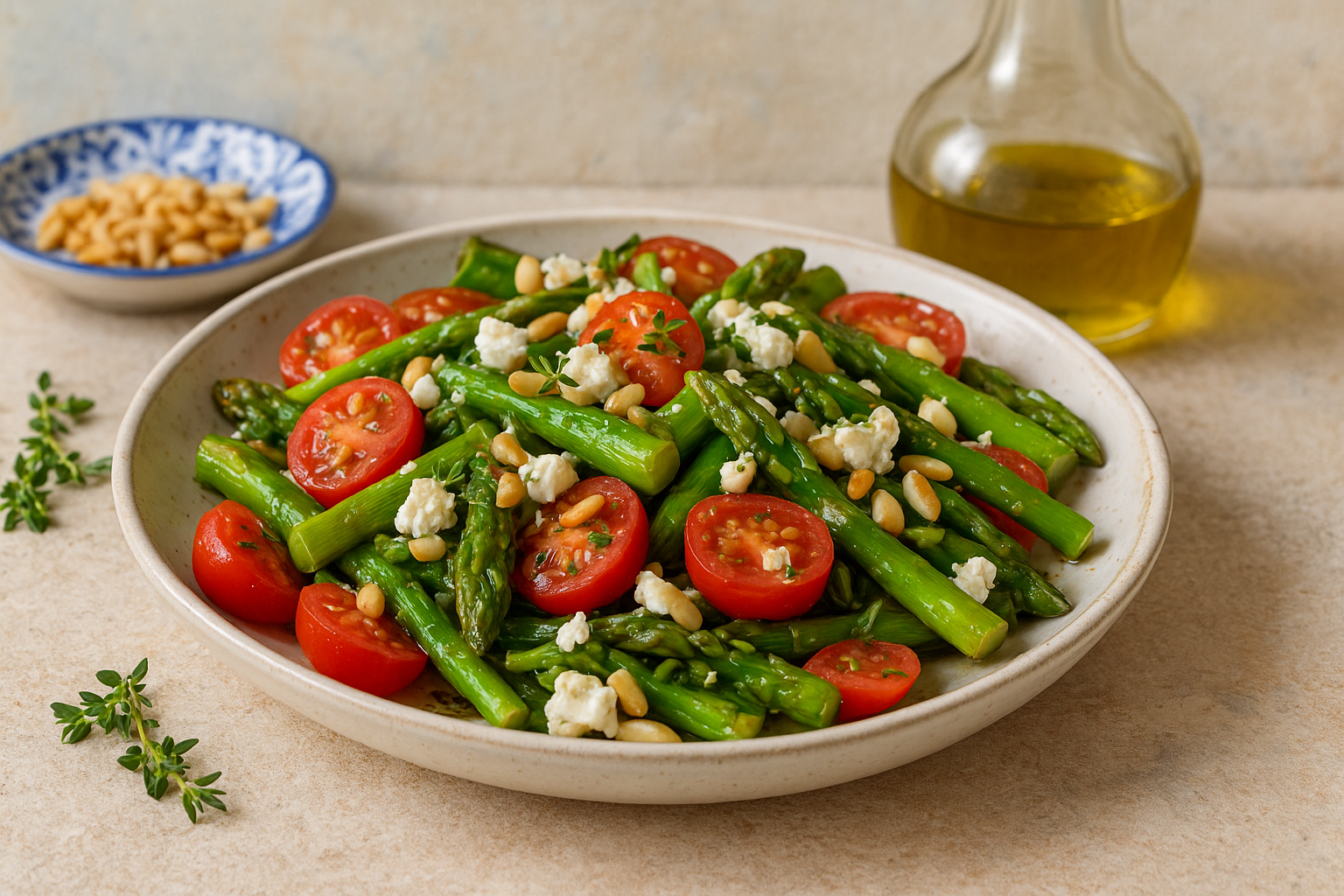
Seinen Abschluss findet der Vorgang im Kühlschrank, wo der Inhalt der Gläser nochmals 1-2 Wochen reifen darf. Der Spargel ist später beispielsweise der besondere Genuss im Salat. (sp)
Von HB-Redakteurin und Food-Bloggerin Sofia Papadopoulou

Greek Cooking: Fermented Wild Asparagus
With this recipe from Greek cuisine, wild asparagus is preserved through natural lactic acid fermentation and develops its characteristic tangy, savory flavor — a special delicacy that works wonderfully as an appetizer, side dish, or ingredient for fresh salads.
INGREDIENTS
Screw-top jars (for a total filling capacity of 1 liter)
500 g wild asparagus or green asparagus
2–3 cloves of garlic
500 ml water
25 g salt
First, wash the asparagus, trim the ends, and cut it into pieces so it can stand upright in the jars. Add some garlic to each jar, cutting it into coarse pieces as well. Pack the asparagus upright into the jars.
Then mix the cold water with as much salt as needed until the water is saturated, meaning the salt no longer dissolves. Fill the jars with the brine. The vegetables must be completely covered, and 1–2 cm of space should be left to the lid.
Let the jars ferment at room temperature for 5–7 days. In the slightly warmer environment, the lactic acid bacteria begin to work — visible as small bubbles between the vegetables. This also makes the brine milky and cloudy.
The process is completed in the refrigerator, where the contents of the jars can mature for another 1–2 weeks. Later, the asparagus is especially delicious in salads, for example.
Ελληνική κουζίνα: Ζυμωμένο άγριο σπαράγγι
Με αυτή τη συνταγή της ελληνικής κουζίνας, το άγριο σπαράγγι συντηρείται με φυσική γαλακτική ζύμωση και αποκτά το χαρακτηριστικό πικάντικο και ξινό άρωμά του — μια ιδιαίτερη λιχουδιά που ταιριάζει εξαιρετικά ως ορεκτικό, συνοδευτικό ή ως συστατικό σε φρέσκες σαλάτες.
ΥΛΙΚΑ
Βαζάκια με βιδωτό καπάκι (συνολικής χωρητικότητας 1 λίτρου)
500 γρ. άγριο σπαράγγι ή πράσινο σπαράγγι
2–3 σκελίδες σκόρδο
500 ml νερό
25 γρ. αλάτι
Αρχικά, πλύνετε το σπαράγγι, κόψτε τις άκρες και χωρίστε το έτσι ώστε να μπορεί να στέκεται όρθιο μέσα στα βαζάκια. Σε κάθε βάζο προσθέστε λίγο σκόρδο, κομμένο επίσης σε χοντρά κομμάτια. Τοποθετήστε το σπαράγγι όρθιο μέσα στα βάζα.
Στη συνέχεια αναμείξτε το κρύο νερό με τόσο αλάτι, ώστε το νερό να κορεστεί, δηλαδή να μην διαλύεται άλλο το αλάτι. Γεμίστε τα βάζα με την άλμη. Τα λαχανικά πρέπει να καλύπτονται πλήρως και να μένουν 1–2 εκ. κενό μέχρι το καπάκι.
Αφήστε τα βάζα να ζυμωθούν για 5–7 ημέρες σε θερμοκρασία δωματίου. Στο ελαφρώς πιο ζεστό περιβάλλον ενεργοποιούνται τα βακτήρια γαλακτικής ζύμωσης — αυτό φαίνεται από τις μικρές φυσαλίδες ανάμεσα στα λαχανικά. Έτσι η άλμη γίνεται επίσης γαλακτώδης και θολή.
Η διαδικασία ολοκληρώνεται στο ψυγείο, όπου το περιεχόμενο των βάζων μπορεί να ωριμάσει για άλλες 1–2 εβδομάδες. Αργότερα, το σπαράγγι είναι ιδιαίτερα απολαυστικό, για παράδειγμα μέσα σε σαλάτα.